✦ In this article
✦ Key takeaways
- →The three pillars of minimalist design
- →How to design minimally without being boring
- →Why brands keep returning to minimalism
- →Closing
Minimalism is not a trend — it is a discipline. Here is how to design less that says more without ending up bland.
This long-form guide from the design team at Oscar Graphix unpacks everything a modern brand, in-house team or freelance designer needs to know about minimalist design: why 'less' still wins in 2026. You'll find field-tested principles, real-world examples, a step-by-step checklist, a structured FAQ and a working glossary — all grounded in years of studio practice across design trends projects for startups, enterprises and cultural institutions alike.
Whether you searched for minimalist design, design trends 2026, less is more because you're preparing a rebrand, building your first identity system, or sharpening your craft as a designer, this article is designed to be read once and referenced many times. Bookmark it — the fundamentals here don't change with the seasons.
Minimalism gets accused of being lazy. In reality, doing less well is far harder than doing more badly. Removing the wrong element ruins a design; removing the right one elevates it.
The three pillars of minimalist design
- Space — generous margins, breathing room, quiet layouts.
- Hierarchy — one clear focal point per screen.
- Restraint — a single accent colour, one or two typefaces.
How to design minimally without being boring
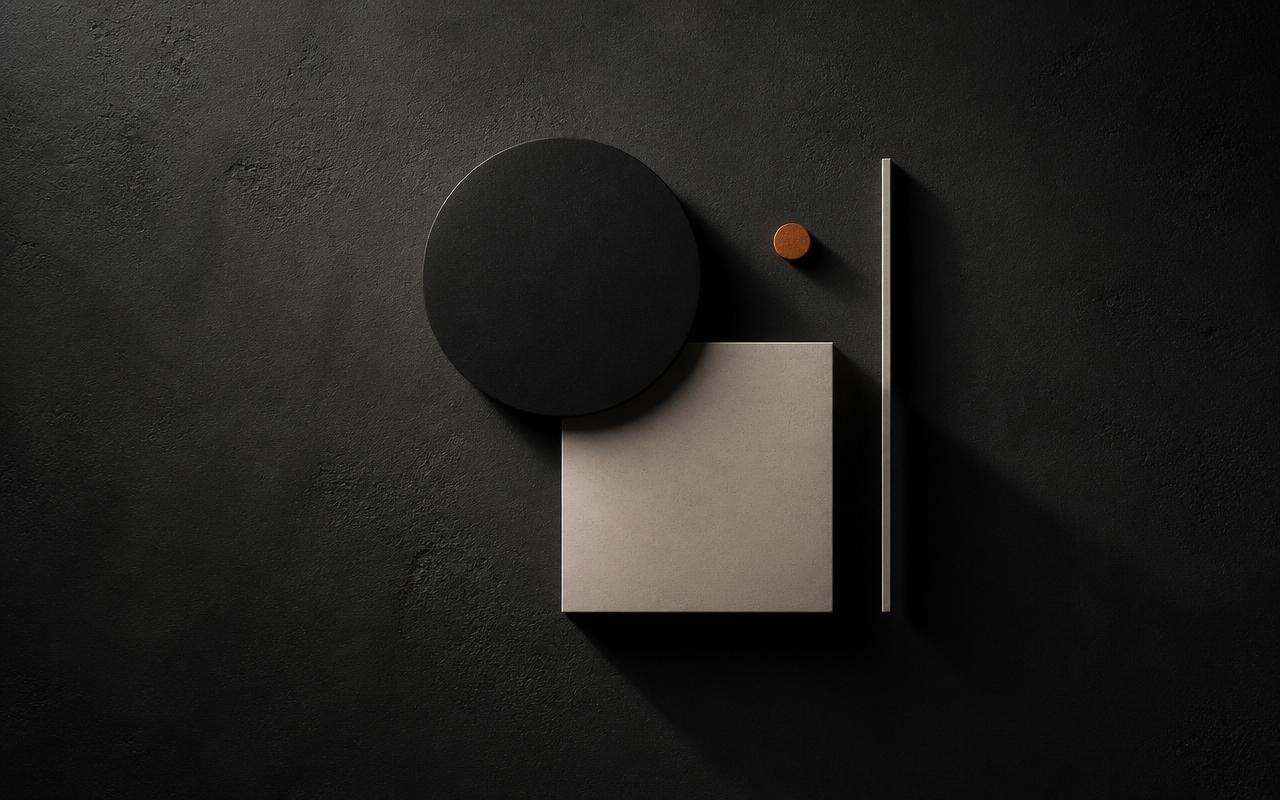
- Anchor the layout on one strong element — a headline, a hero image, or a bold shape.
- Use scale aggressively. Big things next to small things create drama.
- Let the type do the talking. Weight and size can replace ornament.
- Introduce texture through paper, print finish or subtle grain — not through more elements.
Why brands keep returning to minimalism
Minimal design ages slowly, prints cheaply, translates across cultures and reads clearly on any device. When budgets tighten and the world speeds up, minimalism becomes the pragmatic choice, not the aesthetic one.
Closing
Minimalism is not "empty". It is edited. Every element on the page has earned its place — and that discipline is what your audience feels, even if they cannot name it.
Going deeper on each section
Every heading above deserves its own study session. Below is a quick recap you can use as a self-audit — read each point, then rate your current work honestly on a scale of 1–5. Anything below a 4 is a candidate for your next iteration.
- The three pillars of minimalist design — revisit this on your current project and note one concrete change you can ship this week.
- How to design minimally without being boring — revisit this on your current project and note one concrete change you can ship this week.
- Why brands keep returning to minimalism — revisit this on your current project and note one concrete change you can ship this week.
- Closing — revisit this on your current project and note one concrete change you can ship this week.
A practical checklist you can steal
Print this list, pin it above your desk, and walk through it before you sign off any project of this kind.
- Define the objective and audience before touching a tool.
- Audit existing minimalist design against 3 top competitors and note what you can improve.
- Draft at least 3 distinct directions before refining a single favourite.
- Test at extreme scales — favicon-small and billboard-large — before signing off.
- Check accessibility: contrast, legibility and colour-blind safety.
- Prepare a documented system, not one file — variants, spacing rules, do's and don'ts.
- Ship, measure, iterate. Great minimalist design is version-controlled, not frozen.
Frequently asked questions
Why does minimalist design matter for modern brands?
Minimalist Design directly affects how customers perceive credibility, quality and consistency. In a saturated 2026 market, brands that invest in minimalist design are recognised faster, remembered longer and trusted more — which translates into measurable gains in conversion, retention and word-of-mouth referral.
How long does it take to see results from minimalist design?
Most teams see the first visible improvements within 2–6 weeks of applying the principles in this guide, and compounding results across 3–6 months. The gains are cumulative: consistent execution beats one-off effort every single time.
What tools do designers use for minimalist design at Oscar Graphix?
We combine industry-standard tools — Figma, Adobe Illustrator, Photoshop, InDesign and After Effects — with AI-assisted workflows for research, moodboarding and iteration. The tool matters less than the discipline behind it.
Can small businesses benefit from this, or is it only for large brands?
Small businesses arguably benefit the most. A focused approach to minimalist design lets a small team punch far above its weight, look more established than it is, and compete for attention with much larger competitors.
How does Oscar Graphix approach Minimalist Design?
We start with strategy, not aesthetics — clarifying the audience, the business objective and the constraints. Only then do we move into design, testing every deliverable across the real environments it will live in (screen, print, packaging, social, mobile) before final handover.
Quick glossary
The terms below appear throughout this article and across the wider world of professional design work. Keep them handy.
- minimalist design — a core concept in design trends practice; used by Oscar Graphix on nearly every client engagement in this discipline.
- design trends 2026 — a core concept in design trends practice; used by Oscar Graphix on nearly every client engagement in this discipline.
- less is more — a core concept in design trends practice; used by Oscar Graphix on nearly every client engagement in this discipline.
- modern design — a core concept in design trends practice; used by Oscar Graphix on nearly every client engagement in this discipline.
A final word from the studio
Great design trends work is never accidental. It is the compound result of clear thinking, disciplined craft and a willingness to iterate long after the "good enough" moment. If you take one thing from this article, let it be this: the brands you admire are not more talented than you — they are more consistent. Consistency, applied every week for a year, is indistinguishable from genius.
If you'd like an experienced team to partner with on your next project — from strategy through to shipped assets — the Oscar Graphix studio is a conversation away.